
A Better Watch Starts With Knowing What Matters Most
Choosing a watch is about so much more than just finding a nice dial or a brand you recognise. The right watch should be one that fits you, one that is in keeping with your own style and one that has the features you're actually going to use. Some people will opt for a very simple watch for day to day use, others will go for a mechanical movement, a chronograph or a watch that's going to be the centrepiece of their outfit on a special occasion. With the range of options available it's absolutely vital to know what makes one watch different from another.
The best watches aren't necessarily the most expensive or the most complicated. They are the ones that strike the right balance of looks, reliability, comfort, functionality and price for the individual wearer. Whether you're buying your first watch, upgrading your collection or looking for a present, knowing which of the various factors are important will go a long way to helping you make a more informed decision.
Key Takeaways
-
Start with your lifestyle really. Think about where you'll be wearing it and how often you'll be wearing it and then go from there in terms of design.
-
Understand the movement: quartz watches are good for the job of telling the time, mechanicals are for the enthusiast who likes the watch making.
-
Prioritise comfort: case diameter, thickness, weight and strap material all have an impact on how the watch will feel all day.
-
Check the specs: water resistance, crystal material and the range of functions available can make a real difference in day to day use.
-
Choose a versatile design (neutral colours and classic proportions will make it much easier to wear with a variety of outfits).
-
Compare the complete package: look beyond the price and consider the construction, the functionality, the warranty information and the maintenance requirements.
-
Buy it according to your own needs. A good quality everyday watch is going to be far more useful than a very feature packed watch which you'll never actually wear.
Begin With the Way You Actually Live
The best place to start is with your average day. The office worker, the person who goes to the formal functions and tends to wear the more conservative clothes, will probably be looking for a slim watch with a plain dial. The person who is out and about more, who wears the more casual clothes, will probably be after a more sporty watch. The person who likes to change their accessories to match their outfit may be after one with a rather distinctive colour scheme or bracelet.
Think about how often you actually intend to wear the watch and what you expect it to do. A simple three hand model will be quite adequate for day to day use, whereas a chronograph might be the sort of thing that would appeal to someone who wanted a stopwatch function. If you're still in the process of deciding on styles then having a look at the complete watch collection will allow you to compare designs, brands and price points before you start to narrow your options.
Choose a Movement That Suits Your Priorities
A watch's movement is what keeps time. Quartz movements use an electronic oscillator (the frequency of which is determined by a quartz crystal) and are normally powered by a battery. They're generally a very good proposition to own, require very little in the way of regular maintenance and are a sensible choice for someone who just wants a watch that will keep good time without the extra care that a mechanical watch will require.
Mechanical watches work in a completely different way to quartz. They use a mainspring and a series of gears and other bits to keep time. An automatic mechanical watch winds itself via the motion of the wrist, a manual wind watch requires the wearer to wind the crown. They can of course require periodic servicing and their accuracy will vary from movement to movement and under different conditions. If you're at all into traditional watchmaking then have a look at the available watch collections to see what suits your own individual tastes and requirements.
Find the Right Case Size and Wrist Fit
A watch can look absolutely gorgeous in a photograph and yet be utterly uncomfortable to wear. Case diameter is obviously one consideration but it shouldn't be the only one. Case thickness (the distance between the lugs), the shape of the case and the overall weight of the watch all have an effect on how it will sit on the wrist. A big case might be exactly what someone is looking for if they want a very noticeable piece of jewellery, whereas a smaller or thinner case may be much easier to wear under a shirt cuff.
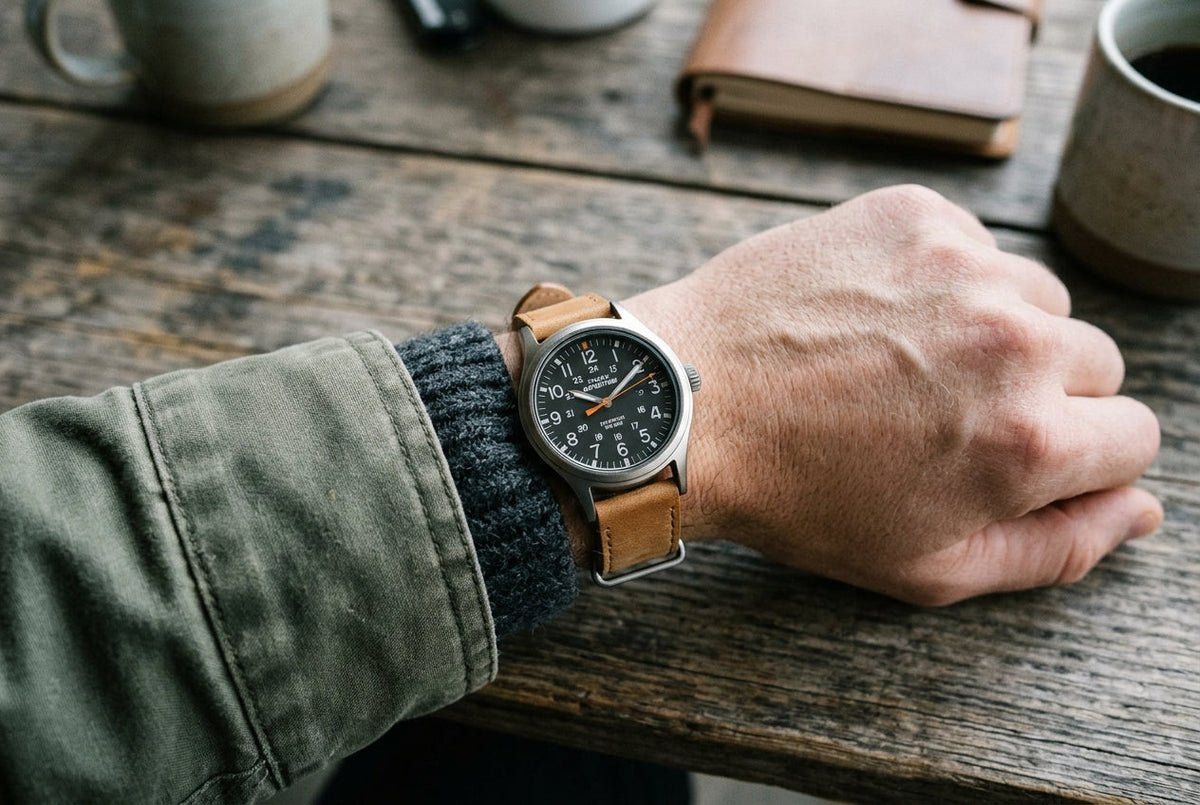
The bracelet or strap is just as important. A stainless steel bracelet has a very solid feel and can be a good match with both smart and casual wear. A leather strap tends to be a more traditional look, while a silicone strap can be ideal for a more sporty watch. Always check the dimensions listed and think about how the watch will sit on your wrist. If you're after a more prominent design then the sport watch collection has some good examples of watches with a distinctly sporty look.
Look Beyond the Dial to the Materials
The materials used in a watch will affect its look, its comfort, its durability and how much maintenance it will require. Stainless steel is by far the most common material for watch cases and bracelets as it provides a good balance of strength and corrosion resistance. Other materials may be used depending on the model in question such as ceramic, titanium, resin or various types of coated metal. Each of these has its own properties so the right choice will depend on your budget, what you're after in terms of appearance and how you plan to wear the watch.
The crystal on the dial is also worth a mention. Mineral glass is very common in a lot of watches, sapphire crystal is of course renowned for its scratch resistance. Neither of those materials makes a watch completely scratch proof though and the overall toughness of a watch is really down to other factors as well. If you're after a distinctive finish then take a look at the ceramic watch collection to see some of the designs that have ceramic in them or ceramic cases.
Understand Water Resistance Before Wearing Your Watch
Water resistance is one of the key specs to look at, especially if you're going to be wearing the watch when you're exercising, travelling or out and about. It's usually quoted in metres, atmospheres or bar. The rating will be based on the conditions under which the watch has been tested and should not be taken as a guarantee that it will be suitable for any activity at that depth.
A watch rated to 30m is not necessarily going to be suitable for swimming at 30m. Water resistance is also going to be affected by the condition of the seals, by ageing, by damage and by whether the crown and other controls are properly secured. Always check the manufacturer's instructions for your particular model before you go swimming or diving. If you're looking for a watch for active use then it makes sense to look at the specs of the various models in the sport watches range.
Select Features You Will Actually Use
Further functions can make a watch more useful, they can also add to the visual clutter and drive the price up. A date is a useful thing to have on a watch for day to day reference and a chronograph enables you to time things. Some watches will have multiple time zones, further calendar displays or even digital features. The right mix of functions is going to be down to your own routine rather than the number of functions that are listed in the product description.
It's important to understand what each feature actually does before you go out and pay a premium for it. A chronograph is not the same thing as a second time zone and a decorative subdial doesn't in any way provide a useful independent function. If you're someone who likes a watch with more going on then the fashion watch collection is worth a look as there is a wide variety of dial layouts, case shapes, colours and general presentation.
Match the Design to Your Wardrobe
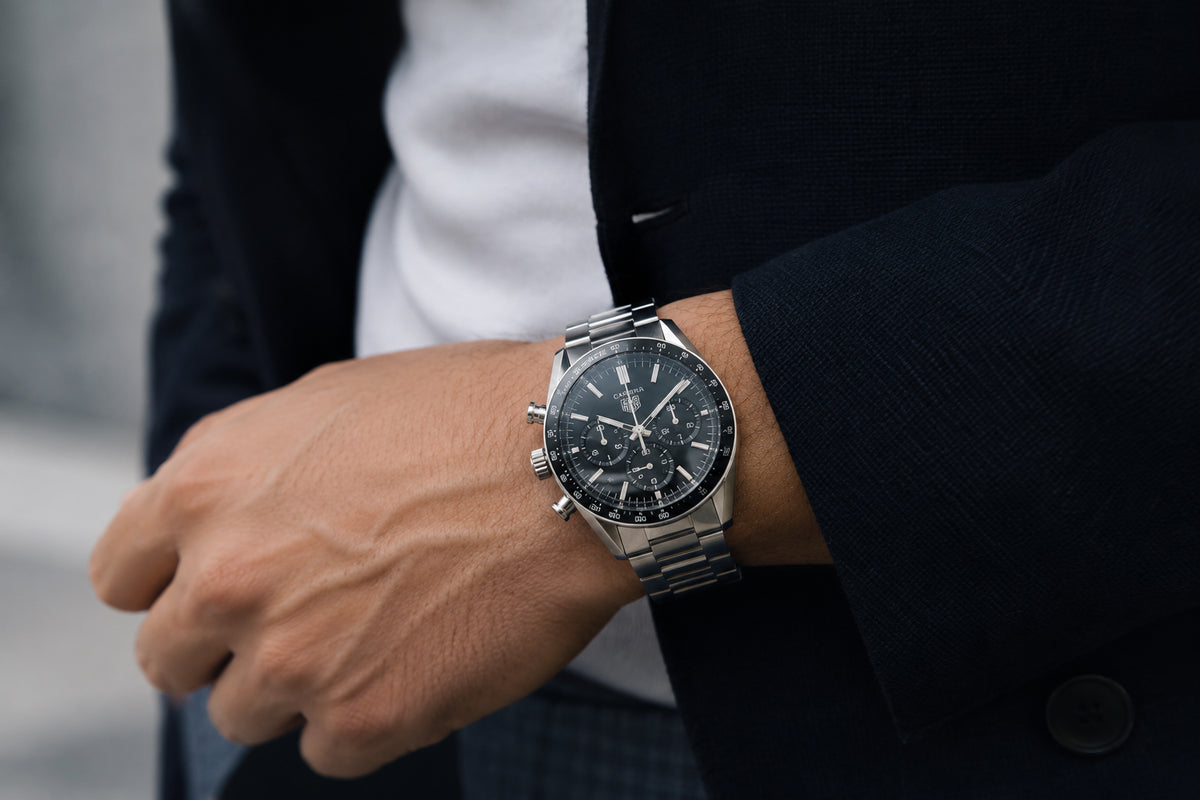
A watch is invariably going to be one of the most worn items in your collection so its design should be something that works with the rest of the clothes you already have. Silver tone cases and bracelets are very versatile and will work with almost any colour scheme. A black dial is a very neutral, easy to match dial. A blue or green dial will add a splash of colour without necessarily making it a difficult watch to wear. A gold tone will be a warmer, more obvious watch.
Consider the occasions on which you'd be wearing the watch. A simple dial and a discreet case will go with pretty much anything from work through to the weekend. A larger case, a more flamboyant dial or a more prominent bracelet may be better suited to a more individualistic style. If you're one of those people who likes warmer metal finishes then the gold watch collection is a good place to start looking at the various gold-tone designs.
Set a Budget That Reflects Long-Term Value
The price of a watch in no way tells you everything about its quality or indeed its suitability. A more expensive watch may have a particular movement, a particular material, a particular construction feature or simply the brand heritage that is important to you. A cheaper watch can still be a perfectly sensible purchase if it's the right watch for you in terms of look, function and comfort.
When you're looking at watches, think about the total ownership experience. Look at the movement, the case and crystal materials, the water resistance, the warranty and any maintenance requirements. A mechanical watch is going to need servicing at some point in its life, a quartz watch will almost certainly need a battery replacement at some stage. Rather than go to the end of the budget just to get some features that you're not going to use, identify the bits that are important to you and compare the watches on that basis. You can also take a look at the best selling watches collection to see a range of watches that other people are looking at.
Make the Final Decision With Confidence
Once you've shortlisted a few watches you'll want to compare the specs of the various models side by side. Case size, movement type, strap or bracelet material, water resistance and the range of functions are all things you'll want to look at. The product photos can be useful in terms of getting a feel for the look of the watch but the written specs are the essential bits of information that you can't really glean from a photograph.
It's also worth checking out the seller's policies prior to ordering. Take a look at the warranty, the return policy, the shipping terms and whether the product description actually specifies the model. At Watches of NZ you can compare a number of different styles and brands to find the watch that's right for you. The best purchase is one that just feels right on your wrist, one that works for your life and one that you can afford.
Frequently Asked Questions
What are the best watches for everyday use?
The best everyday watch is one that is comfortable, easy to read, durable enough for your routine, and appropriate for the places you visit. Quartz watches are a practical option for people who want straightforward timekeeping, while automatic watches appeal to those who appreciate mechanical movements. A versatile dial, a suitable strap, and an appropriate water-resistance rating can also make a watch easier to wear regularly.
Are expensive watches always better?
No. Price can reflect a range of factors, including movement construction, materials, finishing, design, and brand positioning. However, a more expensive watch is not automatically the best choice for every buyer. Compare the specifications, ownership requirements, and features of individual models to determine whether the additional cost provides benefits that matter to you.
Should I choose a quartz or automatic watch?
Choose quartz if you value convenient timekeeping and generally low-maintenance ownership. Consider an automatic watch if you enjoy mechanical engineering and the experience of wearing a traditional self-winding movement. Both types can be suitable for everyday use, but their accuracy, maintenance requirements, and operating characteristics differ.
What size watch should I buy?
The ideal size depends on your wrist dimensions, the shape of the watch case, and your personal style. A case that extends noticeably beyond the sides of your wrist may feel oversized, while a smaller case can create a more understated appearance. Check the case diameter, thickness, and lug-to-lug measurement when these details are available, and consider how the watch will sit beneath your sleeves.
Can I swim while wearing a water-resistant watch?
Only if the watch's stated water resistance and the manufacturer's instructions permit the activity. Water resistance ratings are not interchangeable with guarantees of suitability for swimming, snorkelling, or diving. Check the specifications for your exact model, and remember that seals can deteriorate over time or become compromised by damage.
How long should a good watch last?
A well-made watch can last for many years, but its lifespan depends on the movement, materials, frequency of use, maintenance, and exposure to damage. Quartz watches require battery changes and may need other repairs, while mechanical watches generally benefit from periodic servicing according to the manufacturer's recommendations. Looking after the watch and following its care instructions can help preserve its condition.
Is a watch a good gift?
A watch can be a thoughtful gift because it combines practical use with personal style. To choose well, consider the recipient's preferred colours, wrist size, daily routine, and existing accessories. A versatile design is often a safe starting point when you are unsure of their preferences, while a more distinctive model may be appropriate when you know their taste.
What should I check before buying a watch online?
Read the complete product description and check the model number, movement type, case dimensions, materials, functions, and water-resistance rating. Review the seller's warranty, returns, shipping policies, and product authenticity information as well. Clear specifications and transparent purchasing terms make it easier to compare watches and understand what you are buying.

Written by Kareem Elboray